
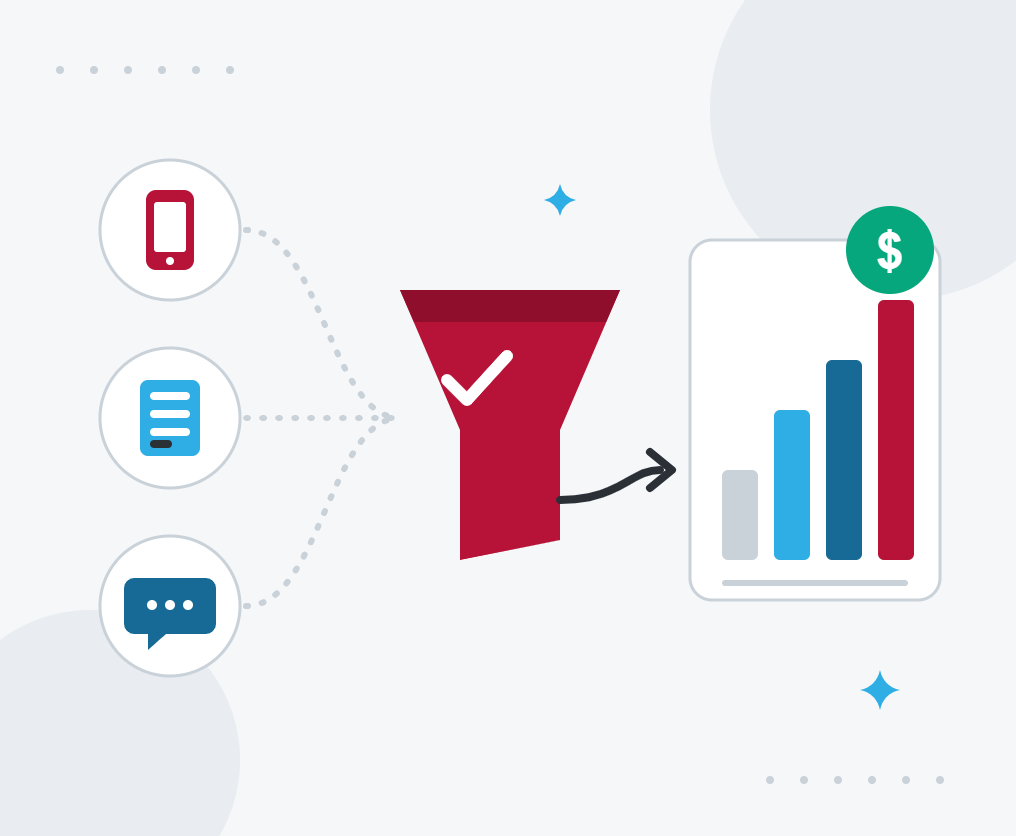
The short answer: lead tracking shows manufacturers which marketing produces real sales opportunities. It connects every call, form and chat to its source, separates qualified leads from noise, and ties them to pipeline and revenue so you can invest in what works.
Most manufacturers can tell you how much they spend on marketing. Far fewer can say which channel produced last quarter’s best new account. Without that answer, budgets get set by habit, gut feel or whoever argues loudest.
Website traffic and ad clicks are easy to measure, but they do not pay the bills. In industrial markets, a large share of inquiries are not sales opportunities at all. Spam, job seekers, vendors pitching services and existing customers calling about orders all show up as “leads” in a basic report.
Buyers also rarely convert on their first visit. An engineer might find you through a Google search, come back through a LinkedIn post, download a spec sheet and finally call the main number three weeks later. If that call is not tied back to the original source, the channel that started the relationship gets no credit.
Qualification works best when it is simple enough that someone actually does it every week. Start with three questions for every lead:
Over time, add stages that match your sales process, such as marketing qualified, sales qualified, quoted and won. That lets you measure not just how many leads each channel produces, but how many become revenue.
| Metric | What it tells you |
|---|---|
| Qualified leads by channel | Which marketing produces real opportunities |
| Qualified lead rate | How much of each channel’s volume is noise |
| Cost per qualified lead | What each real opportunity costs by channel |
| Lead-to-quote and quote-to-win rates | Where opportunities stall in the sales process |
| Pipeline and revenue by source | Which channels deserve more budget |
Lead tracking pays off when the data changes decisions. Shift budget toward channels with the best cost per qualified lead, fix pages and campaigns that attract the wrong inquiries, and use what you learn to sharpen your SEO and AI search, paid search, email and teleservices programs. Every StratMg program is built on this kind of tracking, so clients see which marketing produces revenue.
Lead tracking connects every call, form submission and chat to the marketing source that produced it, such as a Google search, an ad, an email or a referral. It shows which channels produce real sales opportunities, not just traffic.
A call tracking number is a phone number shown on your website or ads that forwards to your main line. Different numbers, or numbers that change by visitor source, let you see which marketing produced each call.
A lead is any inquiry. A qualified lead is an inquiry from a real potential customer with a need you can serve. Spam, job seekers, vendor pitches and existing-customer service calls are leads but not qualified leads.
It depends on the state. Some states, including Illinois, require all parties to consent to recording. If you record calls, use a short greeting such as “This call may be recorded,” and confirm the rules that apply to you with your attorney.
Most manufacturers see useful patterns within 60 to 90 days. Long sales cycles mean revenue attribution takes longer, so plan to review results quarterly and connect them to closed business in your CRM.
If you want a clear picture of where you stand, schedule a 30-minute strategy call. You will walk away with at least three actionable ideas, even if we never work together. You can also see what we have done for other manufacturers in our success stories and client testimonials.